Home Categories Deals Sign Up
Updated: April 25, 2026

Inside ScholarAI: Research Built to Never Hallucinate a Citation

ScholarAI AI tool – ScholarAI was born from a specific failure: ChatGPT generating citations that looked real but referenced papers that did not exist. Co-founder Damon encountered this problem during his own PhD research and partnered with Shashi Mudunuri — founder of Research Square, the world's largest preprint platform, sold to Springer Nature in 2022 — and Lakshya to build something more trustworthy.

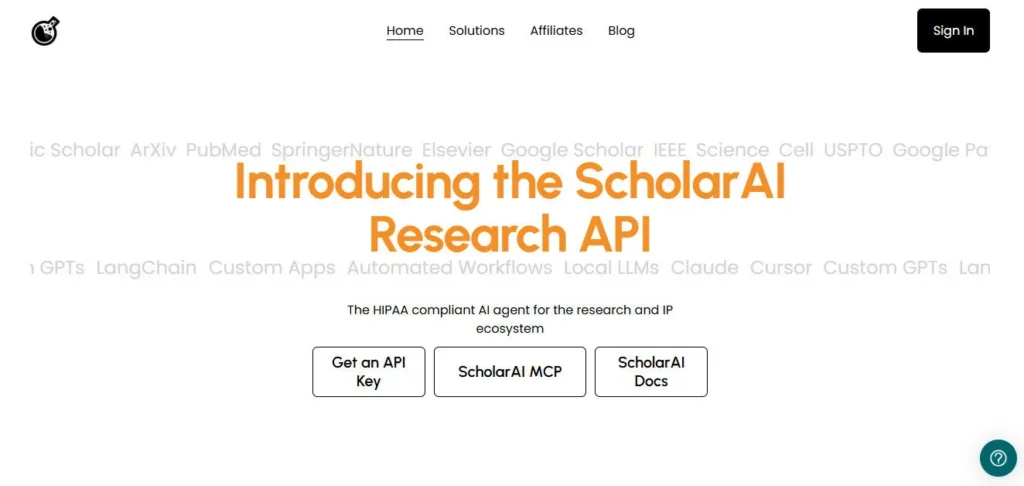
The result is an AI research assistant that searches 200 million peer-reviewed papers and patents using natural language, analyzes full-text PDFs, generates cited drafts, and powers the paper-search infrastructure inside Jenni AI.

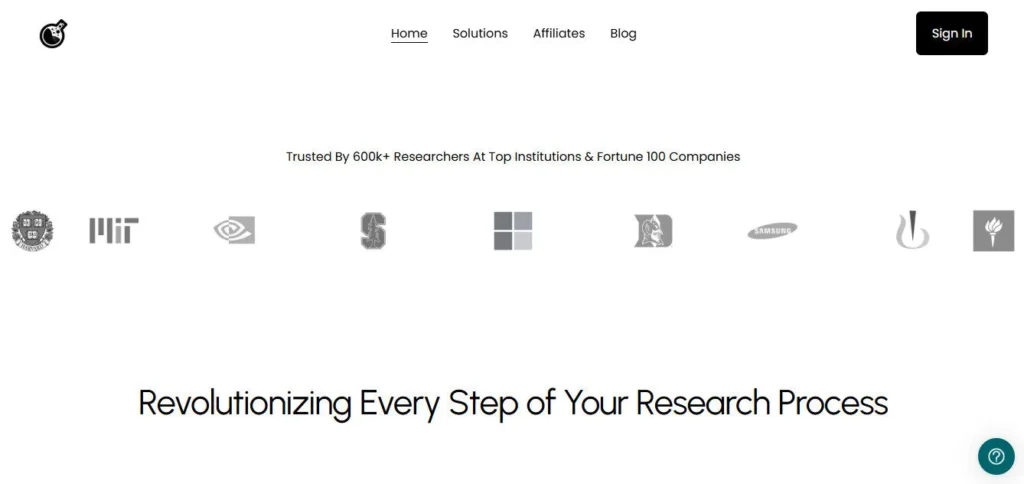
Trusted by 600,000+ researchers at top institutions and Fortune 100 companies, ScholarAI's founding premise is accuracy over speed — a deliberate design choice that distinguishes it from general-purpose AI tools used for academic work.

Key Capabilities

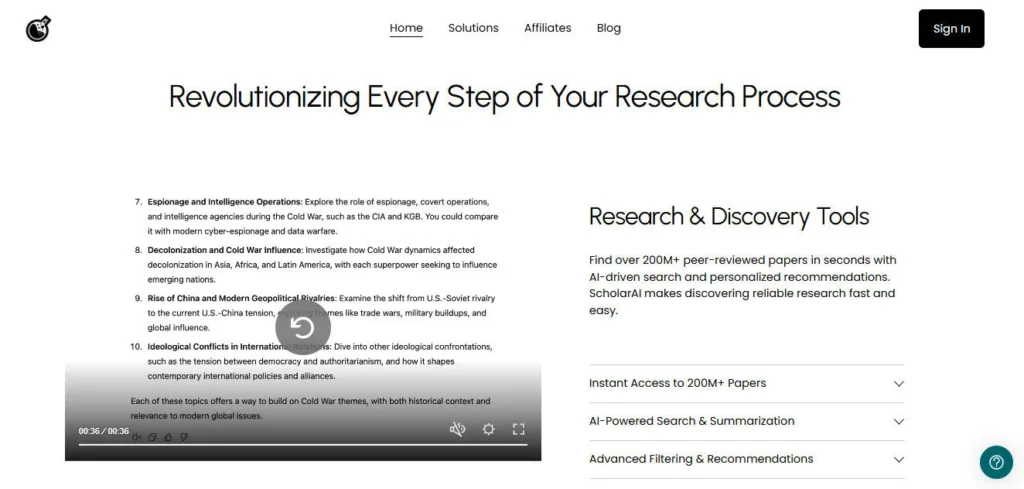
The core research layer searches 200M+ peer-reviewed sources using natural language queries or keywords, returning full metadata, summaries, and smart personalized recommendations. The Literature Map visualizes the citation network around any paper, showing how a study connects to the broader field — a function particularly useful for scoping a new research area quickly.

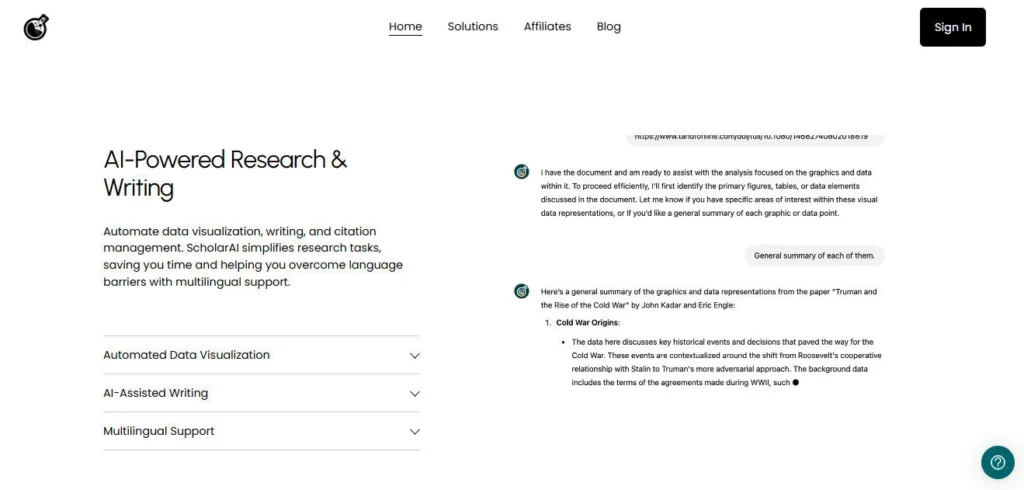
Full-Text Analysis retrieves and processes complete paper content, not just abstracts, enabling deep Q&A about methodology, results, and discussion sections.

The AI Copilot workspace combines search, PDF upload, citation management, and draft generation in one place with Zotero and Mendeley one-click library sync. ScholarAI also offers a custom GPT in the ChatGPT store, accessible to ChatGPT Plus subscribers, and a developer API that allows third-party applications to embed ScholarAI's paper-search and citation capabilities directly.

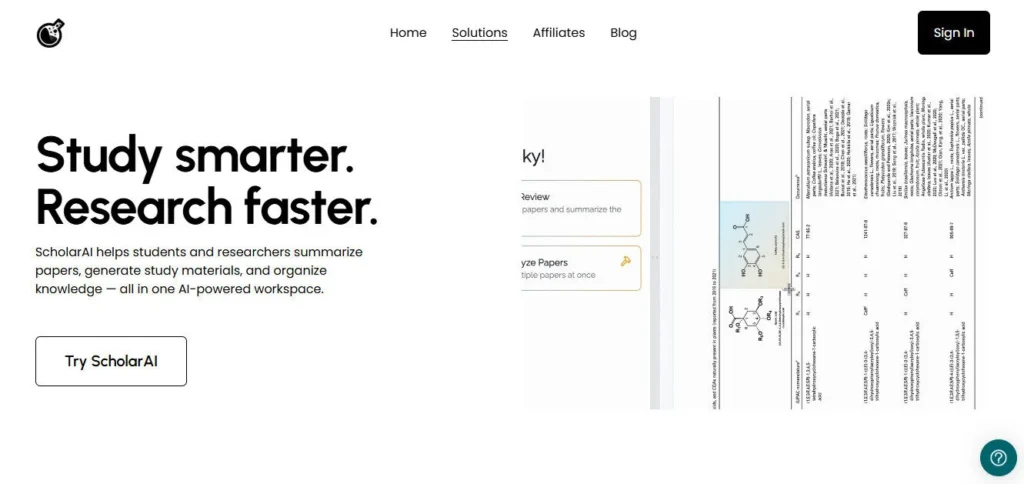
Data visualization converts research data into charts and visuals; flashcard and study guide generation makes it useful for students, not just researchers; and multilingual support removes language barriers for non-English academic content.

Who Gets the Most Out of It

PhD students and research scientists who need full-text access — not just abstract skimming — get the clearest benefit from ScholarAI's emphasis on depth over breadth. Developers building research-adjacent tools and platforms are the target audience for the ScholarAI API.

Healthcare, legal, and technology professionals at Fortune 100 companies who need to stay current with peer-reviewed literature and patent activity without a dedicated research team use ScholarAI to compress that workload.

Students in any discipline use the Copilot to summarize papers, generate flashcards, and draft early sections of essays and literature reviews supported by verified citations.

Is It Worth It?

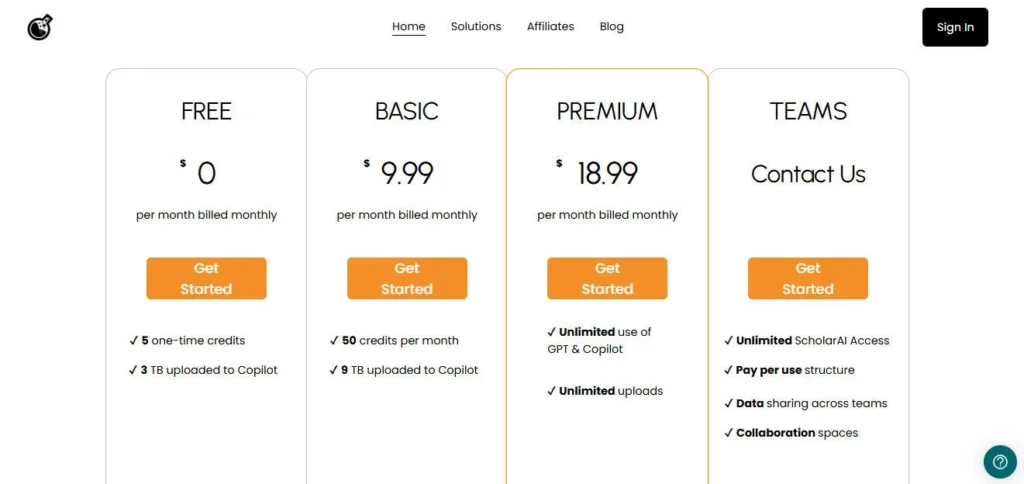
The free plan's 5 one-time credits make it more of a brief demo than a working research tool. Basic at $9.99/month with 50 monthly credits and 9 TB of Copilot storage is the realistic entry point for regular research use — 50 credits covers roughly 50 Copilot responses or 500–1,000 GPT responses per month.

Premium at $18.99/month removes every cap with unlimited Copilot and GPT use, unlimited uploads, and full ScholarAI access, representing strong value for researchers who work with academic literature daily.

The available credit top-up packages (25 credits for $4.99 through 500 credits for $99.99) give Basic users flexibility to handle spikes in research activity without upgrading permanently. For developers, the API pricing is based on usage volume and is competitive for research-augmented applications.

ScholarAI is an AI-powered research assistant founded in 2023 by Shashi Mudunuri (CEO, former founder of Research Square), Damon, and Lakshya, headquartered in Houston, Texas. It searches over 200 million peer-reviewed papers and patents using natural language, analyzes full-text PDFs, generates cited drafts, maps citation networks, and offers a ChatGPT custom GPT and a developer API — all built around a founding mission to eliminate AI-hallucinated citations in academic research.

Trusted by 600,000+ researchers at top institutions and Fortune 100 companies, ScholarAI's paper-search infrastructure also powers the research experience inside Jenni AI.

• 200M+ Paper & Patent Search — Natural language or keyword queries across a global database of peer-reviewed academic papers and patents with full metadata, AI summaries, and personalized recommendations returned instantly.

• Full-Text Analysis — Retrieves and processes the complete body of academic papers — not just abstracts — enabling deep Q&A about methodology, results, limitations, and discussion sections with precise, source-anchored answers.

• Literature Map — Visualizes the citation network surrounding any paper, showing which studies cite it, which it cites, and how it connects to the broader research landscape, enabling fast field scoping without manual bibliography analysis.

• AI Copilot Workspace — Combines paper search, PDF upload (up to 9 TB on Basic, unlimited on Premium), citation management, and AI-assisted draft generation in one unified research environment with Zotero and Mendeley one-click sync.

ScholarAI GPT (ChatGPT Integration) — Available in the ChatGPT custom GPT store, enabling ChatGPT Plus subscribers to run ScholarAI's paper-search and citation capabilities directly inside their existing ChatGPT workflow without switching platforms.

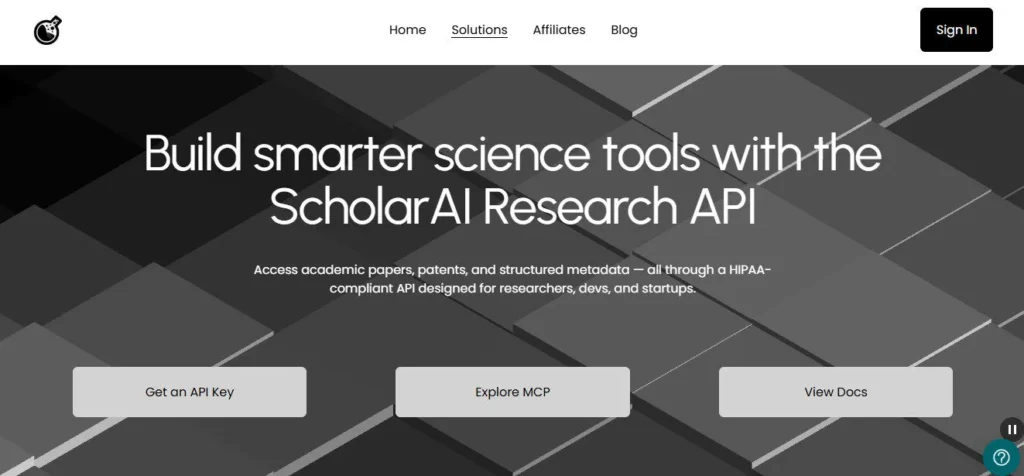
• ScholarAI API — Allows developers and organizations to embed ScholarAI's peer-reviewed paper search, full-text retrieval, and citation generation capabilities into third-party applications, research platforms, and internal tools.

• Data Visualization — Converts complex research data, statistics, and quantitative findings from papers into clear charts and visual summaries for presentations, reports, and publication-ready figures.

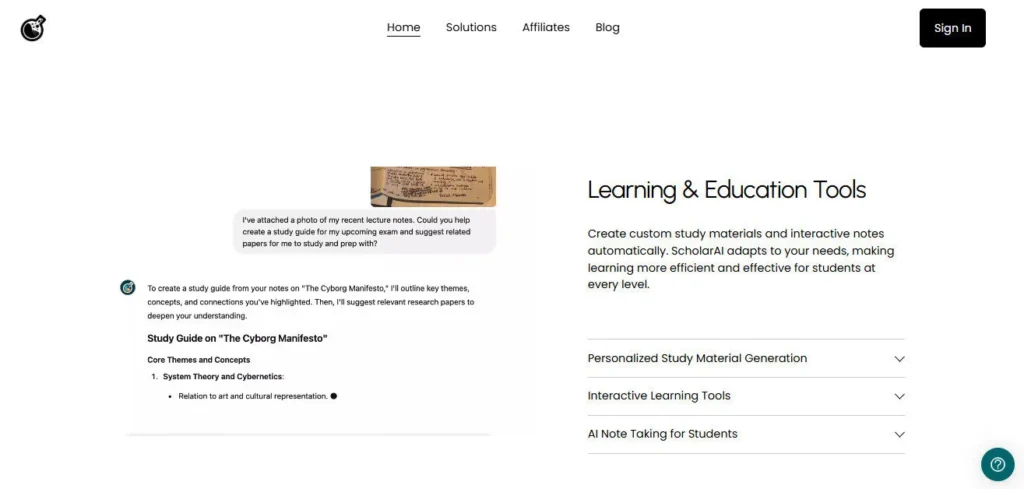
• Study Materials Generator — Creates customized notes, flashcards, study guides, and AI-powered quizzes from uploaded research papers or searched content, making the platform useful for students at every academic level, not just active researchers.

Pros
  • Founded by Shashi Mudunuri, whose prior company Research Square became the world's largest preprint platform — deep domain credibility behind the product
  • Full-text paper analysis retrieves complete paper content, not just abstracts — a critical capability missing in most competing tools
  • Literature Map visualizes citation networks for fast field-scoping without manual bibliography tracing
  • ScholarAI GPT in the ChatGPT store lets users access paper-search capabilities inside ChatGPT Plus without switching platforms
  • Developer API enables organizations to embed 200M+ paper search into their own research tools and applications
  • Zotero and Mendeley one-click sync removes the largest friction point in reference library management
  • Credit top-up packages let Basic users handle research volume spikes without committing to a permanent plan upgrade
Cons
  • ×Free plan's 5 one-time credits provide only a brief demo experience — not enough to evaluate the platform for real research workflows
  • ×Basic plan's 50 credits per month covers approximately 50 Copilot responses — heavy researchers may exhaust credits mid-month regularly
  • ×The platform is a small 2–10 person team, which limits the pace of feature development compared to well-funded competitors
  • ×Literature Map and advanced visualization features have a learning curve that casual users or undergraduates may not invest time to explore
  • ×No built-in AI writing editor with inline autocomplete — users who want to draft inside ScholarAI must export to a separate writing tool
  • ×Teams plan requires direct email contact for pricing — no self-serve onboarding for organizations who want to evaluate enterprise features independently

ScholarAI is best suited for researchers, developers, and professionals who need trusted, full-text access to peer-reviewed literature — not just abstract-level summaries from general AI tools.

• PhD students and research scientists — Full-text analysis and Literature Map answer methodology and citation-network questions that abstract-only tools cannot, making ScholarAI genuinely useful for deep literature work beyond surface-level discovery.

• Developers building research-augmented applications — The ScholarAI API provides 200M+ peer-reviewed paper search and citation infrastructure that developers can embed into their own tools without building a research database from scratch.

• Healthcare, legal, and technology professionals — Practitioners at Fortune 100 companies who need to track peer-reviewed evidence and patent activity across fast-moving fields use ScholarAI to stay current without a dedicated research librarian.

• Students at any academic level — The Copilot's flashcard maker, study guide generator, and AI quiz creation make ScholarAI useful for exam preparation and coursework, not only publication-level research.

• Science and technology journalists — Professionals who need to verify claims in academic papers quickly, check citation networks for source credibility, and summarize complex findings in accessible language use ScholarAI's full-text Q&A to accelerate fact-checking.

Free ($0/mo)5 one-time credits only (1 credit ≈ 1 Copilot response or 10–20 GPT responses), 3 TB storage for Copilot uploads, access to ScholarAI GPT and Copilot at credit-limited capacity — intended as a platform preview.
Basic ($9.99/mo)50 credits per month (≈ 50 Copilot responses or 500–1,000 GPT responses), 9 TB storage for Copilot uploads, access to 200M+ paper and patent search, full-text PDF analysis, Literature Map, Zotero and Mendeley sync, study materials generation, data visualization.
Premium ($18.99/mo)Unlimited use of ScholarAI GPT and Copilot, unlimited document uploads, unlimited ScholarAI access, 200M+ paper and patent search, full-text analysis, Literature Map, citation management, Zotero and Mendeley sync, multilingual support, priority access to all features.
Teams (Custom — contact ScholarAI at [email protected])Pay-per-use credit structure, data sharing across team members, collaboration spaces, dedicated team support, volume-based custom pricing, custom onboarding — enterprise and academic institution use cases.
Credit Add-Ons (one-time, all plans)25 credits for $4.99, 50 credits for $9.99, 100 credits for $19.99, 500 credits for $99.99 — usable in both Copilot and ScholarAI GPT.

ScholarAI's founding mission — building research AI that cannot hallucinate citations — runs through every product decision, giving it a credibility architecture that general-purpose AI tools lack.

• Founded by a Research Infrastructure Veteran — CEO Shashi Mudunuri built and scaled Research Square into the world's largest preprint platform before its exit to Springer Nature in 2022. No other AI research tool at ScholarAI's price point is led by someone with direct prior experience operating at the core of academic publishing infrastructure.

• Full-Text Retrieval, Not Just Abstracts — ScholarAI's getFullText function retrieves complete paper content for AI analysis. Most competing tools answer questions from abstracts only, which misses methodology details, result tables, supplementary data, and discussion nuance that serious researchers need.

• Literature Map Citation Visualization — The visual citation network map around any paper is a research scoping tool that competing platforms in the same price range do not offer, making it easier to identify foundational papers, see which studies are building on each other, and spot research clusters before reading individual papers.

• Native ChatGPT GPT Store Integration — ScholarAI is one of the few research tools with a well-established, actively maintained custom GPT in the ChatGPT store, meaning researchers already inside ChatGPT Plus can access 200M+ peer-reviewed papers without leaving their existing workflow.

ScholarAI integrates with the tools researchers already use, reducing friction in the transition from existing workflows.

• Zotero and Mendeley (One-Click Sync) — Import your complete reference library from Zotero or Mendeley in one click with full metadata and PDFs preserved, eliminating manual re-uploading of papers and maintaining source type formatting.

ChatGPT GPT Store — The ScholarAI custom GPT is available in the OpenAI GPT store, accessible to ChatGPT Plus subscribers who can run paper searches and citation queries directly inside ChatGPT without opening a separate application.

• ScholarAI API — Developers can integrate ScholarAI's 200M+ peer-reviewed paper search, full-text retrieval, and citation generation into third-party applications via the documented API, with usage-based pricing and a dedicated API User Guide at scholarai.io.

Jenni AI — ScholarAI's paper-search infrastructure officially powers the research experience inside Jenni AI, meaning users of Jenni's AI writing workspace benefit from ScholarAI's database and citation architecture transparently in the background.

• All Major Web Browsers — The ScholarAI Copilot workspace is fully browser-based and accessible on Chrome, Firefox, Safari, and Edge without any software installation; the free plan is available immediately at scholarai.io.

CategoryScoreWhy It Matters
Accuracy & Reliability4.6/5ScholarAI was explicitly architected to solve citation hallucination — the core reliability failure of general-purpose AI tools in academic contexts. Every result is drawn from a validated 200M+ paper and patent database with verified metadata, and full-text retrieval processes actual paper content rather than AI-reconstructed training data. The credibility of the founding team — particularly Shashi Mudunuri's prior experience building Research Square — adds institutional confidence in the underlying data infrastructure.
Ease of Use4.1/5The Copilot workspace and natural language search are immediately intuitive for researchers familiar with academic database tools. The ScholarAI GPT inside ChatGPT removes all platform friction for existing ChatGPT Plus users. However, the Literature Map and Full-Text Analysis features have a moderate learning curve, and the credit system requires users to think actively about consumption per query — adding cognitive overhead not present in unlimited platforms.
Functionality & Features4.4/5ScholarAI covers the broadest research-specific feature set available at its price point: 200M+ paper and patent search, full-text analysis (not just abstract), Literature Map citation network visualization, Zotero/Mendeley sync, AI Copilot workspace, ChatGPT GPT integration, developer API, data visualization, multilingual support, and study materials generation. The missing piece is a built-in long-form writing editor with inline AI autocomplete, which requires users to move to Jenni AI for the drafting phase.
Performance & Speed4.3/5Natural language searches across 200M+ papers return results with metadata and summaries quickly, typically within seconds. Full-text PDF analysis for standard-length academic papers operates at competitive speeds. The Literature Map renders citation networks efficiently for papers with moderate citation volumes. Platform performance at scale is supported by Jenni AI's infrastructure partnership, which implies backend stability beyond what a 2–10 person standalone team could maintain alone.
Customization & Flexibility4.0/5ScholarAI adapts across user types — from PhD researchers using full-text analysis and Literature Map, to students using flashcard generation, to developers using the API. Multilingual support and personalized recommendations add meaningful flexibility for international and specialized researchers. The main customization gap is the absence of adjustable citation recency filters, domain-specific search scoping, or AI model selection — all of which would benefit specialized research fields.
Data Privacy & Security4.0/5ScholarAI is trusted by researchers at Fortune 100 companies, implying reasonable enterprise-grade data handling practices. The founding team's background includes operating Research Square under Springer Nature's data governance standards, suggesting familiarity with institutional research data requirements. SOC 2 certification and detailed data retention or deletion policies are not prominently published on the public website, which is a transparency gap for institutional procurement processes.
Support & Resources3.8/5ScholarAI is a 2–10 person team, which naturally limits the scale of support resources available. The support email ([email protected]) is the primary contact point for all plans including Teams. An active blog addresses research methodology and AI tool comparisons, and multiple independent YouTube tutorials cover the ChatGPT GPT integration. Teams plan customers have a direct contact channel, but self-serve SLA documentation and a public help center are not as comprehensive as larger competitor platforms.
Cost-Efficiency4.3/5At $9.99/month for Basic (50 credits, 9 TB storage, full platform access) and $18.99/month for unlimited Premium, ScholarAI is one of the most cost-effective deep-research tools available — particularly given the full-text analysis, Literature Map, and Zotero/Mendeley sync included at both tiers. The credit top-up packages ($4.99–$99.99) give Basic users flexible overage management without forced upgrades. The free plan's 5-credit limit is insufficient for meaningful cost evaluation, which is the one pricing transparency gap worth noting.
Overall Score4.2/5ScholarAI is the most academically credible and citation-trustworthy AI research assistant available in 2026, founded by a team with direct prior experience at the core of global academic publishing infrastructure. Full-text analysis, Literature Map, ChatGPT GPT integration, and a developer API cover capabilities that few competing tools offer at $9.99–$18.99/month. The small team size, credit-based consumption model, and absence of a built-in writing editor are the honest trade-offs — but for researchers who prioritize verified, deep paper access over polished draft generation, ScholarAI is the most reliable foundation available.

ScholarAI is the most trustworthy and academically grounded AI research assistant available at its price point in 2026, built by a team with direct prior experience running research infrastructure at the core of academic publishing. The full-text paper analysis, Literature Map, 200M+ source database, native ChatGPT integration, and developer API give it a capability breadth that casual academic AI tools cannot match.

The free plan's 5-credit limit, the Basic plan's 50-credit monthly cap, and the absence of a built-in writing editor are honest limitations — but for researchers who need accurate, deep access to the peer-reviewed literature rather than polished essay drafts, ScholarAI delivers a research foundation that more feature-heavy competitors still struggle to match.

Q1.What is ScholarAI and who created it?
Ans:-ScholarAI is an AI-powered research assistant that searches over 200 million peer-reviewed papers and patents, analyzes full-text PDFs, visualizes citation networks, and generates cited research drafts. It was founded in 2023 by Shashi Mudunuri (CEO, former founder of Research Square — the world's largest preprint platform), Damon (a PhD researcher who experienced AI citation hallucination firsthand), and Lakshya, and is headquartered in Houston, Texas.
Q2.Is ScholarAI free to use?
Ans:-ScholarAI has a free plan that provides 5 one-time credits and 3 TB of Copilot storage. One credit equals approximately 1 Copilot AI response or 10–20 ScholarAI GPT responses. The free tier is sufficient to briefly explore the platform's interface and core capabilities but is not designed for ongoing research work. Paid plans start at $9.99/month for 50 credits per month and 9 TB of Copilot storage.
Q3.How does the ScholarAI credit system work?
Ans:-One credit equals approximately 1 AI-generated response in the ScholarAI Copilot or between 10–20 responses in the ScholarAI GPT, depending on query complexity. Free plan users receive 5 one-time credits; Basic plan users get 50 credits per month; Premium plan users have unlimited use. Additional credits can be purchased anytime as one-time add-ons: 25 credits for $4.99, 50 for $9.99, 100 for $19.99, or 500 for $99.99.
Q4.What is the ScholarAI GPT and how do I access it?
Ans:-The ScholarAI GPT is a custom AI assistant available in the OpenAI ChatGPT custom GPT store, accessible to ChatGPT Plus subscribers. You can find it by searching 'ScholarAI' in the GPT store at chat.openai.com or directly at the link provided on scholarai.io. It brings ScholarAI's 200M+ peer-reviewed paper database into your existing ChatGPT workflow without switching platforms.
Q5.What is the difference between ScholarAI and Jenni AI?
Ans:-ScholarAI and Jenni AI are now part of the same ecosystem — ScholarAI's paper-search infrastructure officially powers the research experience inside Jenni AI. ScholarAI focuses on research discovery, full-text analysis, Literature Map visualization, and the developer API. Jenni AI focuses on inline writing assistance, AI Autocomplete, and document drafting. Users who want to discover and analyze research deeply should use ScholarAI; those who want to draft and write cited papers should use Jenni AI.
Q6.How does ScholarAI avoid AI hallucinations in citations?
Ans:-ScholarAI was specifically designed to address citation hallucination — the problem of AI tools generating plausible-looking but non-existent paper references. Every search result is drawn directly from a validated 200M+ paper and patent database with verified metadata. Full-text retrieval returns actual paper content rather than AI-generated summaries of training data. This source-first architecture means every citation in ScholarAI is a real, retrievable paper.
Q7.Does ScholarAI have an API for developers?
Ans:-Yes. The ScholarAI API allows developers and organizations to integrate ScholarAI's peer-reviewed paper search, full-text retrieval, and citation generation into their own applications. Detailed documentation is available in the API User Guide at scholarai.io. Pricing for API access is usage-based and suited to organizations building research-augmented tools, academic platforms, or enterprise knowledge systems.
Q8.Can I sync my Zotero or Mendeley library with ScholarAI?
Ans:-Yes. ScholarAI supports one-click library sync with both Zotero and Mendeley. The import process preserves complete metadata and PDF attachments, meaning your existing reference collection is available for AI analysis inside the Copilot immediately after syncing without manual file re-uploads or metadata re-entry.
Q9.What does ScholarAI's Literature Map feature do?
Ans:-The Literature Map visualizes the citation network around any paper — showing which studies cite it, which papers it cites, and how it relates to adjacent research clusters. This is particularly useful for researchers entering a new field, enabling them to identify foundational papers, active research groups, and emerging themes in minutes without manually tracing citation lists through individual paper reference sections.
Q10.Is ScholarAI suitable for students, not just research scientists?
Ans:-Yes. While ScholarAI's full-text analysis and Literature Map are advanced tools for researchers and PhD students, the platform also includes a study materials generator that creates customized notes, flashcards, study guides, and AI-powered quizzes from uploaded papers or searched content. Students at any academic level can use the Copilot to summarize complex papers, answer specific questions about assigned readings, and build study aids without manually processing each document.

Promote This Tool

Help others discover this tool by sharing this page.

✓ Link copied to clipboard!

ScholarAI Reviews

0.0
Based on 0 reviews
5 star
0%
4 star
0%
3 star
0%
2 star
0%
1 star
0%

Write a Review

Your Rating:

No reviews yet. Be the first to share your thoughts!

40 Similar ScholarAI Tools